Most requested
Buyer’s inspection
A licensed professional evaluates the home before you finalize the deal — roof to foundation, major and minor, nothing glossed over.
Inspection services
Every service below is performed by JT himself under his own licenses — radon and mold included. Nothing is subcontracted out.
Most requested
A licensed professional evaluates the home before you finalize the deal — roof to foundation, major and minor, nothing glossed over.
Before you list
Find out what’s wrong before the market does. Fix it or price for it, and avoid renegotiation and delays at closing.
Infrared
Infrared scanning verifies hidden moisture in bathrooms, under sinks and in ceilings. It also reveals overloaded breakers in a panel and radiant heat in flooring.
Add-on
A camera runs the main lateral from the cleanout to the city main or the septic tank, and you get video of the whole run. Roots, grease and collapsed pipe show up immediately.
48-hour minimum
IAC2 certified radon measurement. Strongly recommended anywhere along the Arkansas–Missouri border, where elevated readings are common.
IAC2 certified
Samples collected from areas of concern and analysed by an accredited laboratory, with fast turnaround on results.
Add-on
Non-toxic dye traces where water actually travels, exposing leaks and blockages. The load half deliberately stresses the system to confirm it handles design volume.
Add-on
Drinking water analysis for properties on a private well — standard practice on rural acreage throughout this service area.
Landlords & buyers
Surface sampling for methamphetamine residue. Protects tenants, limits landlord liability, and documents the property’s condition before and after a tenancy.
HUD/VA
Full inspection plus HUD/VA certificate of HUD compliance and foundation certification for manufactured and modular homes.
Specialist
Log construction has failure modes ordinary framing doesn’t. Sealing, chinking, checking and moisture intrusion all get specific attention.
Standard
Moisture, structure, insulation, ventilation and pest evidence in the space most buyers never look at themselves.
AR
Arkansas insurance inspections, including four-point style reporting on roof, electrical, plumbing and HVAC condition.
Licensed AR #10192501
Residential solar array and system inspection, performed under an Arkansas solar systems license.
New construction
Catch framing, wiring, plumbing and flashing problems on new construction while everything is still visible and cheap to correct.
New construction
Before your builder’s one-year warranty expires, get a documented list of everything that should go on the punch list.
Septic/sewer
Locates leaks in septic and sewer piping that a camera pass alone can miss, including cracked vents and failed seals.
Efficiency
Where the home loses money, ranked by what to address first for the biggest return.
Valuation
Documentation of efficiency features to support valuation and resale.
Add-ons worth the money
Tree roots find sewer pipe. Grease cools and collects, then debris hangs on it — toilet paper, and especially baby wipes, which do not all break down. Add the kids’ toys that go missing, and the line stops up completely.
It is always worth knowing whether the main line carrying waste away from the house has a problem before you buy it.
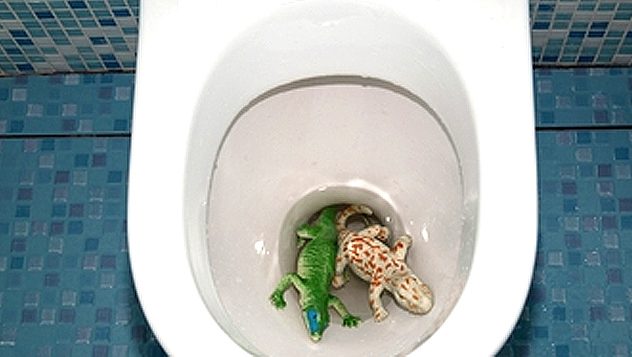
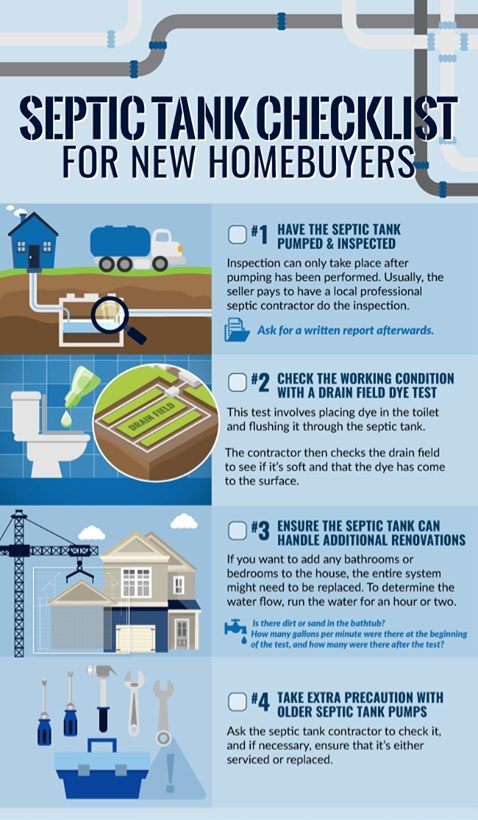
A non-toxic, biodegradable dye goes into the plumbing, then fixtures are used normally to trace where water actually travels. Dye surfacing where it shouldn’t — on the ground, or in nearby water — points straight at a fault.
The load half floods the system deliberately to see whether it copes with the volume it was designed for. Together they are standard due diligence on any property with septic.
An infrared scan verifies moisture where you cannot see it — in bathrooms, under sinks and in ceilings. If you have water stains around a toilet or on a ceiling below a bathroom, this is the service that tells you whether it is still wet.
The same scan shows breakers in a panel that may be overloaded, and radiant heat in flooring.


Thermal imaging is not only for water. A breaker running hot shows up immediately on an infrared scan, long before it announces itself any other way.
Visible electrical safety concerns are documented in the report with the image attached, so you and your electrician are looking at the same evidence.
Methamphetamine is highly toxic, and long-term exposure carries real respiratory and neurological risk. Production also damages ventilation, walls, floors and wiring — expensive to repair, and enough to make a property uninhabitable.
For landlords there is a legal dimension too: you are responsible for providing a property free of hazardous substances. Testing between tenancies is the straightforward way to know.

Tree roots find their way into clay and older pipe and keep growing. Grease cools and collects on the pipe wall, then debris hangs on it.
Baby wipes are the worst offender — many do not break down at all, whatever the packet says.


Visual inspection, thermal imaging and moisture meters first, to find the source. Mold needs moisture; without fixing that, remediation is temporary.
Samples of suspected growth go to a certified lab. You get results naming the types of mold present and their spore counts — not a guess.

Radiant heat in flooring, and moisture tracking under it, both show on an infrared scan. So do water stains around toilets, where the question is always whether it is still active.

Mold and indoor air quality work runs under AR Mold Inspection, a subsidiary of Cherokee Home Inspection LLC. Visual inspection, thermal imaging and moisture meters find the source; samples go to a certified lab.
You get results naming the types of mold present and their spore counts — not a guess. IAC2 mold and radon certified, #94193.
Mold: know when to stop
Mold needs moisture to grow. If the suspect area is larger than about 9 sq ft — a 3×3 patch — do not try to remediate it yourself. Call a professional.
Arkansas & Missouri radon
Radon is a naturally occurring radioactive gas — inert, colourless, odourless — and the second leading cause of lung cancer in the United States. It becomes trapped indoors through cracks and openings in the foundation.

At point of sale
The EPA recommends every house be tested during a sale, whatever radon zone it sits in. Radon testing is a separate service and has to be requested — it is not part of a standard inspection. If the result is 4 pCi/L or higher, buyers commonly negotiate for the seller to install a mitigation system.
The calculator walks you through it, or call and JT will tell you straight.